
AI tools for small business are not complicated and they are not expensive. The ones worth starting with, ChatGPT, Zapier, and one good scheduling or inbox tool, cost between $0 and $30 a month and can save a small Nigerian business 10 to 15 hours a week on tasks like responding to customer messages, writing content, and processing recurring admin. This post covers what these tools actually do, which ones to start with, what they cost in Naira, and, honestly, when you are not ready for them yet.
The honest answer on AI tools for small business: most Nigerian business owners already have access to tools that would save them hours every week and are not using them, not because the tools are too complicated, but because nobody explained what they actually do.
AI automation for business is not about replacing your staff or building robots. It is about getting a computer to handle the parts of your day that do not require a human, drafting the same three customer replies you write every morning, sorting your inbox, turning a voice note into a written report. The technology is ready. The barrier is knowing where to start.
The direct answer: AI tools for small business automate repetitive tasks, generate written content, manage customer communications, and process information faster than any human can. The tools that matter for a small Nigerian business cost between free and ₦50,000 a month. You do not need a developer. You do not need a tech background. You need one hour to set up the first tool and the patience to use it for two weeks.
Here is what the tools actually do, which ones to start with, and when to stop reading and just start.

What AI automation actually does for a Nigerian business
Ignore the word "automation" for a second. Think about the tasks in your business that happen the same way, every day or every week.
A customer messages you on WhatsApp asking your prices. You type the same reply. A client asks for an invoice. You open a template, fill it in, send it. Someone wants to know your location and opening hours. You type the same paragraph you have typed two hundred times. A content creator wants a caption for a post. You spend forty minutes staring at a blank screen.
None of those tasks require a human brain. They require information and a keyboard. AI tools handle exactly that category of work.
More specifically:
Writing and content generation. A tool like ChatGPT drafts emails, writes social media captions, summarises long documents, generates product descriptions, and creates first drafts of reports. You edit. You approve. The blank-page problem disappears.
Customer message handling. Tools like Tidio or ManyChat connect to your WhatsApp, Instagram, or website chat and answer the questions customers ask most, business hours, pricing, how to order, how to return, what services you offer. The tool responds instantly, even at 2am when you are asleep.
Task and workflow automation. A tool like Zapier links your other tools together. When a new lead fills in your Google Form, Zapier automatically adds them to your spreadsheet, sends them a welcome email, and creates a task in your to-do list. You set this up once. It runs by itself from then on.
Scheduling and calendar management. Calendly or similar tools let customers book themselves into your schedule without a back-and-forth WhatsApp conversation. You set your available slots. They pick one. You both get a confirmation.
The underlying point: AI tools for small business remove the parts of your job that are purely mechanical, so that what's left is the work that actually requires you.

The workflows Nigerian businesses automate first
Not every workflow is the right starting point. The ones worth starting with share two characteristics: they happen frequently and they follow a predictable pattern.
Customer enquiries and FAQs. Nine out of ten WhatsApp messages a typical Nigerian small business receives are the same five questions. Price, location, availability, payment method, turnaround time. A simple AI chatbot set up on your WhatsApp Business or Instagram handles all five without you typing a word.
Content and social media. Writing captions, email newsletters, promotional messages, and blog introductions is where most business owners lose time that has nothing to do with their actual work. ChatGPT drafts these in seconds. You spend three minutes editing instead of forty minutes writing.
Lead capture and follow-up. A customer fills in a form on your website. Without automation, you check your email, spot the lead, write a reply, and file the information somewhere. With Zapier and a simple workflow, the lead lands in your CRM, gets an automated welcome message, and appears on your task list, all before you have even seen the notification.
Invoicing and payment reminders. Tools like Wave (free) or FreshBooks connect to simple automations that send invoices when a job is completed and follow up automatically if payment has not arrived in seven days. A Lagos restaurant owner I know was spending Sunday evenings chasing payment on catering jobs. One afternoon setting up an automated reminder workflow ended that.
Meeting notes and summaries. Tools like Otter.ai or Notion AI record and transcribe your calls and meetings, then summarise the key decisions and action points. You leave a meeting with a written record rather than scribbled notes you cannot read two days later.
These are not exotic use cases. They are the everyday friction that drains small business owners across Nigeria, and they are all solvable with tools that exist right now.
The AI tools that are worth starting with
Rule of thumb: start with one tool, get comfortable, add another. The mistake most people make is installing five tools on day one, using none of them properly, and concluding that AI automation does not work.
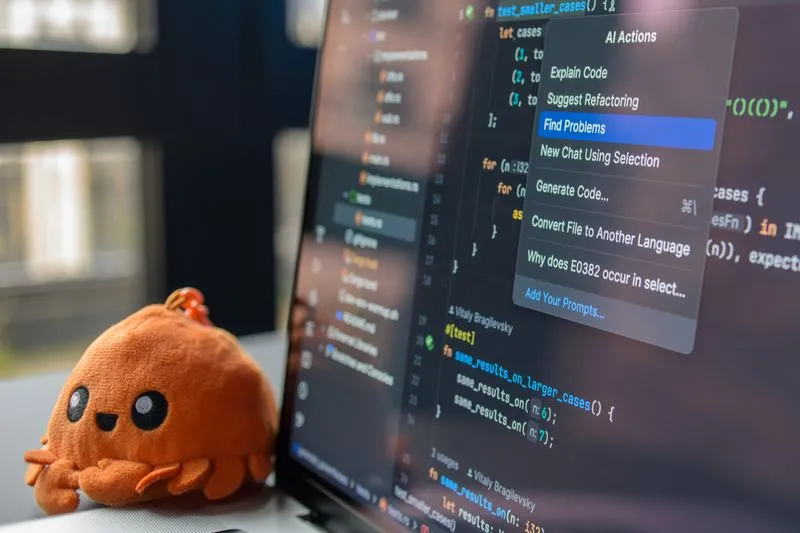
ChatGPT (free / $20 a month). The starting point for almost everyone. Use it for drafting emails, writing captions, summarising documents, brainstorming, generating first drafts of anything written. The free version is capable enough for most small business writing tasks. The paid version (ChatGPT Plus at $20/month) adds faster responses and access to the latest model. At the current exchange rate, that is roughly ₦32,000 a month.
Zapier (free tier available). The tool that connects everything else. The free tier allows five "zaps" (automated workflows) which is enough to start. A typical beginner zap: new Google Form submission triggers a Gmail welcome email and creates a Notion task. No code required. Zapier has a library of pre-built templates for the most common workflows, so you do not start from scratch.
WhatsApp Business with a chatbot tool (Tidio, ManyChat, or WATI). For Nigerian businesses, WhatsApp is the primary customer channel. Tools like WATI connect directly to WhatsApp Business API and let you build automated replies for your most common customer questions. WATI starts at around $39/month (roughly ₦62,000). Tidio has a free tier that works well for lower-volume businesses.
Canva AI (free / $13 a month). Nigerian small businesses that spend money on freelance design for routine social media posts can replace most of that work with Canva Pro's AI features. Magic Design, the AI background remover, and the brand kit tools handle the repetitive design work. Canva Pro is $13/month (approximately ₦21,000).
Notion AI or Google Workspace AI. If your business runs on documents and meeting notes, Notion AI (included with Notion Plus at $10/month) or Google's Gemini integration (included with Workspace) handles summarisation, drafting, and information retrieval from your own documents.
Three tools is a reasonable starting stack: ChatGPT for writing, Zapier for connecting workflows, and WATI or Tidio for customer messages. That covers the highest-frequency friction points for most small Nigerian businesses.
How to get started with AI automation in three steps
The mistake most people make is trying to automate everything at once. The right approach is narrower.
Step 1: List the five tasks you repeat most. Open a notebook or your phone's notes app. Write down the five tasks you do most frequently that follow the same pattern every time. "Reply to price enquiries on WhatsApp." "Post to Instagram three times a week." "Follow up on unpaid invoices." "Write a weekly email update to clients." These are your automation targets.
Step 2: Pick the one that costs you the most time and find one tool for it. Not five tools. One. If you spend two hours a day replying to WhatsApp enquiries, set up WhatsApp Business with a chatbot. If you lose a Sunday afternoon every week writing social media content, start with ChatGPT. Do not move to the next tool until the first one is running reliably.
Step 3: Measure what changed after two weeks. How much time did you save? Which questions are still coming through that the tool is not handling? Adjust. Add a second workflow. Then, if it is working, consider adding the second tool from your list.
That is the whole framework. The businesses that get real value from AI tools for small business are not the ones with the most tools. They are the ones that use three tools consistently.

What AI automation actually costs (in Naira)
Real numbers, as of mid-2026. Dollar amounts converted at roughly ₦1,600 per dollar:
| Tool | What it does | Monthly cost (USD) | Approximate Naira | |---|---|---|---| | ChatGPT Free | Writing, drafts, Q&A | Free | Free | | ChatGPT Plus | Faster, better writing | $20 | ₦32,000 | | Zapier Free | 5 automated workflows | Free | Free | | Zapier Starter | 20 workflows | $19.99 | ₦32,000 | | Canva Pro | AI-assisted design | $13 | ₦21,000 | | WATI (WhatsApp chatbot) | Customer message automation | $39 | ₦62,000 | | Tidio (chat + chatbot) | Website and Instagram chat | Free / $19 | Free / ₦30,000 | | Notion AI | Document and note intelligence | $10 (Plus tier) | ₦16,000 | | Wave (invoicing) | Invoicing with automation | Free | Free |
A practical starter stack, ChatGPT Free, Zapier Free, and WhatsApp Business (free), costs nothing. Moving to ChatGPT Plus, Zapier Starter, and WATI costs roughly ₦126,000 a month. For a business saving 10 to 15 hours a week, that is worth calculating against the hourly value of your own time.
The point is not that these tools are cheap. The point is that the calculation is worth doing with actual numbers, not assumptions.

When you don't need AI automation yet
This is the section most AI guides skip. It is worth reading.
If your basic operations are not documented, automation makes the chaos faster. Automation follows rules. If there are no rules yet, if every customer enquiry gets a different response depending on who picks up, if your pricing changes depending on the day, if your invoicing process is different every month, then automating those workflows will just automate the inconsistency. Document the process first. Then automate it.
If you have fewer than 20 customer interactions a week. At that volume, the time investment to set up and maintain a chatbot does not yet pay for itself. Handle the messages personally. When volume grows past 20 to 30 a week and you are feeling it, that is the right moment.
If your budget is genuinely constrained right now. The free tiers of most tools are adequate for testing. But if you are spending mental energy managing tool subscriptions rather than running your business, simplify. One tool used well beats three tools used badly.
If you are about to make a major business model change. Do not automate a process you are planning to redesign in three months. Automate what is stable and settled. You can always add automation later; removing a badly designed workflow that customers have come to expect is harder.
That's worth knowing, because the worst-case scenario with AI automation is not that it fails to save you time. It is that it automates the wrong thing and locks in a process that should have been redesigned.

Want to learn AI automation yourself?
If you want to build these skills yourself rather than outsourcing the setup, that is the right call for a lot of business owners. Understanding the tools you are running means you can maintain them, adjust them, and extend them without calling someone every time something breaks.
At Alpha Digital Network, we run training in AI automation, digital marketing, and web tools for individuals and business teams across Nigeria, in person in Abuja and online. We teach the tools we use with actual clients, not textbook exercises. If you want to learn how to set up ChatGPT workflows, build Zapier automations, and connect WhatsApp Business to a working chatbot, our training programs cover all of it.
- →Our training programs , learn SEO, AI automation, web design, and digital marketing directly from us.
- →SEO services in Nigeria , what real SEO costs, how long it takes, and how to pick an agency that isn't wasting your money.
- →Talk to us , if you want someone to look at your business and tell you honestly what to automate first.
Want to learn AI automation yourself?
We train individuals and organisations across Nigeria and Africa. In person in Abuja, online, one-on-one, or as a group session for your team. Everything we do for clients, we teach. You walk away with skills you can use the next day.

Frequently Asked Questions About AI Tools for Small Business
- Can Nigerian small businesses actually use AI tools without a tech background?
- Yes. The tools worth starting with, ChatGPT, Zapier, and WhatsApp chatbot platforms, are designed to be used without coding or technical training. ChatGPT works like a chat app. Zapier has templates for the most common workflows. The honest caveat: you need one to two hours to set each tool up properly and two weeks of consistent use to see results. It is a learning curve, not a barrier.
- What is the best free AI tool for a small business in Nigeria?
- ChatGPT Free is the highest-value starting point for most Nigerian small businesses. It handles writing tasks, customer message drafts, content ideas, document summaries, and general business Q&A at no cost. Combine it with WhatsApp Business (also free) for customer communication and Wave (also free) for invoicing automation, and you have a working AI stack before spending a naira.
- How much time can AI tools save a small Nigerian business each week?
- Businesses that use three to five AI tools consistently report saving 10 to 15 hours per week on routine tasks like writing, customer enquiries, invoicing, and scheduling. The exact number depends on how repetitive your current workflows are. A business with high WhatsApp message volume and frequent content creation will save more than a business where most work is custom and non-repeating.
- Which AI tools work with WhatsApp Business in Nigeria?
- WATI is the most commonly used platform for connecting AI chatbots to WhatsApp Business API in Nigeria. It costs around $39 per month (approximately ₦62,000) and allows you to build automated replies for common customer questions. Tidio and ManyChat also support WhatsApp integration. For businesses just starting, the built-in auto-reply feature in WhatsApp Business (free) handles basic FAQ automation without a third-party tool.
- Is AI automation safe for business data in Nigeria?
- The main consideration is what data you share with which tool. Do not paste sensitive customer information, financial records, or private business documents into ChatGPT or any AI assistant. Use these tools for drafting, brainstorming, and handling publicly shareable information. For internal documents that contain sensitive data, use tools with proper data processing agreements, like Google Workspace AI or Microsoft Copilot, which have enterprise data policies.
- How long does it take to see results from AI tools for small business?
- For writing and content tools like ChatGPT, the time saving is immediate from day one. For automated workflows built with Zapier or WhatsApp chatbots, allow one week to set up and test, then two to four weeks of running before you have a clear picture of the time saved and the gaps to fill. Do not judge AI automation after one day. Judge it after one month of consistent use.
- Do I need to hire someone to set up AI automation for my business?
- For most of the tools in this guide, no. ChatGPT requires no setup. Zapier has a setup wizard. WhatsApp Business auto-replies take about 30 minutes to configure. WATI and similar chatbot platforms have onboarding guides. Where businesses commonly get stuck is connecting multiple tools together or building more complex workflows. That is where it makes sense to bring in a consultant or attend a training program to learn the setup properly rather than guessing through it.
- What is the difference between AI automation and hiring a virtual assistant?
- AI automation handles tasks that follow predictable patterns: the same customer questions, the same email templates, the same document formats. A virtual assistant handles tasks that require judgement, relationship management, or adapting to new situations. For most Nigerian small businesses, AI automation replaces about 30 to 40 percent of what a virtual assistant would do, at a fraction of the cost. The remaining 60 to 70 percent still benefits from a human. The right answer for growing businesses is often both: automation for the predictable, a person for the complex.
These Q&As are emitted as FAQPage schema in the page head. Google may show them directly in search results.
Still not sure? Send us a message.
If you are not sure which AI tools fit your business, or you want someone to look at your current setup and tell you honestly what is worth automating and what is not, send us a WhatsApp message or give us a call. We will give you 20 minutes. No pitch. Just the honest answer.