
Starting a blog in Nigeria is mostly a sequencing problem, not a money problem. Pick a niche people actually search for, set it up on WordPress with a domain and hosting that won't crawl on mobile data, publish real content before you promote anything, and do basic SEO from the first post. Most Nigerian blogs that stall did everything except the SEO and promotion steps. This guide covers the order that actually works, what it costs, how bloggers here make money, and when it's worth paying someone to set it up properly instead.
You can start a blog in Nigeria this week. Setting it up is the easy part.
The harder part, the part most "how to start a blog" guides skip, is doing the steps in an order that doesn't waste your first six months. Pick a niche with no demand, write on a free platform you don't control, leave SEO for "later," and you'll have a blog with twelve posts and forty visitors a year from now. I've watched this happen with side-projects more times than I can count.
The direct answer: pick a topic Nigerians actually search for, set it up on WordPress with your own domain and hosting, publish real content before you promote anything, do basic SEO from the first post, then promote where your audience already spends time. Money comes after that, not before it.
This guide walks through each step, what it actually costs, how Nigerian bloggers make money, and when it's worth paying someone to set it up properly instead of doing it all yourself.

Pick a niche Nigerians actually search for
Most new bloggers pick a niche based on what they're interested in. That's not wrong, but it's only half the question. The other half is whether anyone searches for it.
A "lifestyle blog" is the most common starting point and the hardest to grow. It's not a niche, it's everything, which Google reads as a blog about nothing in particular. The blogs that actually grow in Nigeria pick something specific: personal finance for young professionals, tech reviews for the Nigerian market, parenting in Lagos, side hustles, relationship advice for a specific audience, or a local interest like Nollywood news or football.
Before you commit, search your topic ideas on Google and look at what comes up. If the first page is full of forums, old posts from 2019, and thin content, that's an opening. If it's full of major publications with huge followings, you'll need a narrower angle to compete.
Run your topic ideas through a free keyword tool (Ubersuggest's free tier is enough to start) filtered to Nigeria. You're looking for phrases with real monthly searches and low competition. A niche with zero searches isn't a niche, it's a diary, and diaries don't get traffic.

Choose a blogging platform: WordPress vs the free options
For a blog you actually want to grow, self-hosted WordPress (WordPress.org, not WordPress.com) is the standard recommendation, and there's a reason it's still the standard after twenty years. It's free software, it has thousands of themes and plugins, and it gives you full control over SEO, design, and monetisation.
Free platforms (WordPress.com's free tier, Blogger, Medium) are fine for testing an idea. You can publish in an afternoon at no cost. The catch is that you don't fully own it. Your blog lives on someone else's domain, you're limited in what plugins and ads you can use, and if the platform changes its rules, your content goes with it. It's the difference between renting and owning, except the landlord can also delete your furniture.
If you're testing whether you'll actually stick with a topic, start free. If you've already decided you're doing this for the next year regardless, go straight to self-hosted WordPress. Moving a blog from a free platform to your own domain later is possible, but it's messy, and you lose whatever search rankings the old URLs had built up.
Get a domain name and hosting that won't slow you down
Your domain name should be short, easy to say out loud, and ideally hint at your niche. Avoid numbers, hyphens, and anything that needs spelling out on a phone call. A .com is still the safest default. A .com.ng works if the .com version of your name is taken and your audience is specifically Nigerian.
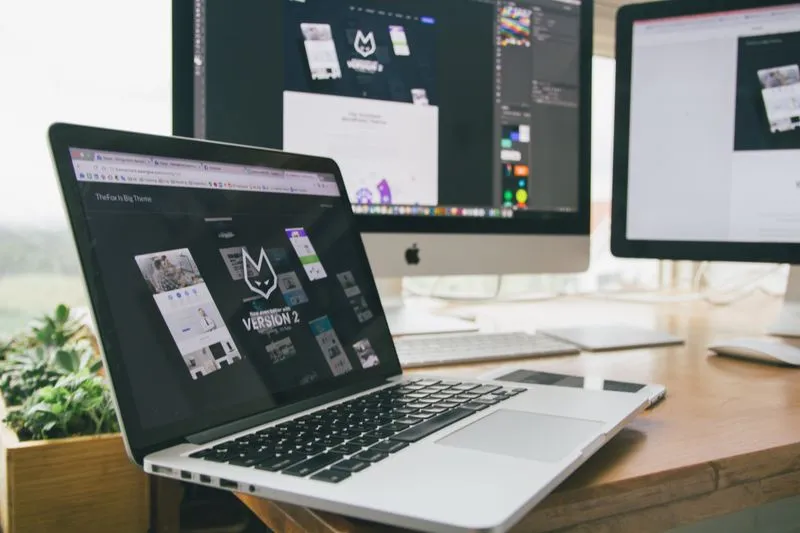
Hosting is where people cut corners, and it's the corner that costs the most later. A domain is a small, predictable annual cost. Hosting is the bigger ongoing decision, and the cheapest shared hosting plans are usually the slowest. We've seen business websites that take so long to load on mobile data that visitors leave before a single word appears on screen. A blog that loads slowly loses readers before they read anything, and Google notices the same thing your readers do.
Look for hosting with good performance for African traffic, one-click WordPress installs, and free SSL. You don't need the most expensive plan. You need one that doesn't make your blog feel broken on a phone.

Set up your blog and publish your first ten posts
Once WordPress is installed, resist the urge to spend two weeks customising the theme. Pick a clean, fast, mobile-friendly theme (most modern free themes qualify) and start writing.
Write your first ten posts before you tell anyone the blog exists. Ten is not arbitrary. It's enough to prove to yourself that you can sustain the topic, enough for Google to start understanding what your blog is about, and enough that a first-time visitor finds more than one thing to read.
Here's the opinion that gets argued about more than it should: content length is overrated, content depth is not. The top three results for most Nigerian search queries are 800 to 1,200 words, not 3,000. A focused post that actually answers the question, with no padding, will outperform a long post that circles the topic without landing on an answer. Write to fully answer the question. Stop when you've answered it. If that's 700 words, it's 700 words.
Do basic SEO so people can actually find your blog
SEO for a new blog isn't complicated, it's just often skipped. Three things matter from post one.
Titles and headings that match how people search. If your post answers "how to start a side hustle in Lagos," the title should say roughly that, not something clever and unrelated. Google, and your reader, should know what the post is about from the title alone.
Internal links between your own posts. Every new post should link to one or two older posts on related topics. This helps readers find more content and helps Google understand how your blog's topics connect to each other.
Submit a sitemap to Google Search Console. It's free, takes ten minutes, and tells Google your posts exist instead of waiting for them to be discovered on their own.
Here's the part most beginner guides leave out: writing good content is necessary but not sufficient. We worked with a client whose competitor outranked them for a high-volume keyword despite having, by any honest measure, weaker content. The difference was 47 backlinks from Nigerian sites versus the client's 2. Content quality wasn't the deciding factor. Authority was.
For a new blog, this means guest posts on bigger Nigerian blogs in your niche, getting mentioned in roundups, and building relationships with other bloggers who'll link to your work. It's slower than writing, and it's the step almost everyone skips, which is exactly why it works for the people who don't skip it.

Promote your blog where Nigerians actually hang out
Posting a link to your personal Facebook page once and waiting for traffic isn't a promotion strategy, it's a hope strategy.
Where Nigerian readers actually find new blogs: Twitter/X threads, especially if your niche has active communities there, WhatsApp groups and broadcast lists relevant to your topic, Telegram communities, Facebook groups (still very active for parenting, business, and local interest niches), and Pinterest if your niche is visual, think food, fashion, or DIY.
Pick two platforms, not five. Trying to be active everywhere at once is how people burn out by month two. Share your post, then actually participate, answer questions, comment on other people's posts, be useful. The blogs that grow fastest are run by people who show up consistently in the same two or three places, not the ones who post a link and disappear.

How bloggers in Nigeria actually make money
Monetisation only works once you have an audience, and audiences take time. Here's what actually generates income for Nigerian bloggers, roughly in the order most people reach them.
Display ads (Google AdSense and similar networks). Requires approval and meaningful traffic before it's worth anything. Early on, this is more of a milestone than an income source.
Affiliate marketing. Recommending products or services and earning a commission on sales through your link. This works best when your content already helps people make a decision, a review, a comparison, a "how to" that naturally leads to a tool or product.
Sponsored posts. Brands pay to be featured once your blog has an audience in a niche they care about. This usually comes after AdSense, not before, because brands want to see traffic numbers first.
Your own products. Ebooks, templates, mini-courses, or a paid newsletter. Higher effort, but you keep all the revenue and it doesn't depend on traffic volume the way ads do.
Freelance work from your portfolio. This is the one most people underestimate. A blog with twenty solid posts in a niche is also a portfolio. We pay ₦25,000 per 1,000-word article to writers who can demonstrate they understand a topic and write cleanly, and we're not unusual. A blog is the easiest way to prove you can do that before anyone hires you.
None of these work without an audience first. That's the order: audience first, monetisation after.

How long before a blog in Nigeria makes money
Honest answer: longer than most "start a blog and make money" videos suggest, and the timeline mirrors what we tell SEO clients.
For low-competition topics with consistent posting, the first sign of traction, Google Search Console showing impressions and a small trickle of search traffic, usually appears in 60 to 90 days. That's traffic, not income. Meaningful income, the kind that feels worth the time, typically takes 6 to 12 months of consistent publishing, and that's for people posting at least weekly.
The bloggers who quit usually quit around month three, right when the foundation work is done and things are about to start moving. It's the same pattern we see with SEO clients: the first quarter looks like nothing is happening, because it's mostly indexing and foundation. If you're treating a blog as a get-rich-quick scheme, six months is a long time to wait for "quick." If you're treating it as a channel you're building for the next few years, six months is normal.

When to do this yourself and when to get help
Do the blog itself yourself, at least at first. The cost of testing whether you'll stick with a niche is low: a domain, basic hosting, and your time. There's no good reason to pay someone thousands to set up something you can learn to do in a weekend.
Where it makes sense to bring someone in:
You want a proper business website, not just a blog. If the blog is one part of a business site with services pages, a contact form, and a brand identity, that's a bigger build than a WordPress blog theme. A 5-page business website with proper design runs ₦350,000 as a one-off with us, and that includes the technical setup most beginners get wrong on their own.
You've outgrown DIY SEO. Basic on-page SEO (titles, headings, internal links, a sitemap) is learnable in an afternoon. Technical SEO, link building, and a content strategy that actually targets the right keywords is a different level of work. If your blog has 50+ posts and traffic still isn't moving, that's usually a sign the foundations need a proper audit, not more posts.
Your time is worth more than the learning curve. If you're running a business and blogging is meant to support it, not become it, the hours spent learning hosting, SEO, and design might be better spent on the business itself, with someone else handling the blog's technical side.
If none of that applies yet, do it yourself first. You'll understand your own blog better for having built it, and you'll know exactly what you're paying for if you bring someone in later.

Want to learn blogging directly from us?
Alpha Digital Network runs content marketing training in Abuja, online, and as 1-on-1 sessions for individuals and corporate teams. The training covers everything in this guide in more depth: niche and keyword research for the Nigerian market, setting up WordPress properly, on-page SEO for content, and building the kind of audience that actually converts into income.
If you're based outside Abuja, the online format covers the same material. If you already have a blog and it's stuck, 1-on-1 training is structured around your actual blog and your actual numbers, not generic examples.
- →Learn content marketing directly from us , in-person in Abuja, online, or 1-on-1. Structured around your actual blog and your actual numbers.
- →How to learn SEO in Nigeria , the skill that decides whether anyone finds the blog you just built.
- →How much a website costs in Nigeria , if your blog is going to be part of a bigger business site.
- →Send us a message , if you'd rather have someone set this up properly than figure it out yourself.
Want to learn content marketing yourself?
We train individuals and organisations across Nigeria and Africa. In person in Abuja, online, one-on-one, or as a group session for your team. Everything we do for clients, we teach. You walk away with skills you can use the next day.

Frequently Asked Questions About Starting a Blog in Nigeria
- How much does it cost to start a blog in Nigeria?
- Free if you start on WordPress.com or Blogger, though you'll have less control and a less professional web address. If you want your own domain and hosting, the recommended setup if you're serious about it, the domain is a small annual cost and hosting is the bigger recurring one. Avoid the cheapest shared hosting plans, they're often the reason new blogs load slowly and lose readers before the first post even appears.
- Can I start a blog in Nigeria without technical skills?
- Yes. WordPress, both the free and self-hosted versions, is built for non-developers, with themes you can install in one click and no code required for a basic setup. The skills that matter more, writing titles that match search queries, linking your own posts together, submitting a sitemap, take a few hours to learn and don't require coding.
- Which blogging platform is best for beginners in Nigeria?
- Self-hosted WordPress (WordPress.org) if you're committed to growing the blog, because you own the domain, control monetisation, and aren't limited by a free platform's rules. If you're still testing whether you'll stick with the topic, a free platform like WordPress.com or Blogger is fine to start, just expect to migrate later if it works out.
- How do bloggers in Nigeria make money?
- Mainly five ways, usually in this order as the blog grows: display ads through Google AdSense once traffic is meaningful, affiliate marketing (commission on products you recommend), sponsored posts once you have an audience in a specific niche, selling your own products like ebooks or courses, and freelance writing or consulting work that comes from people seeing your blog as a portfolio. None of these work without an audience first.
- How long does it take for a blog to start making money in Nigeria?
- First signs of traffic, a small trickle of search visitors, typically show up in 60 to 90 days for low-competition topics with consistent posting. Income that feels meaningful usually takes 6 to 12 months of weekly publishing. Most people who quit do so around month three, right before things start moving.
- Do I need to know how to code to start a blog?
- No. Modern WordPress themes and page builders handle the design without code. Understanding basic HTML, how headings and links work, is useful for writing better posts, but you can build, write, and publish a blog entirely without ever opening a code editor.
- How often should I publish on a new blog?
- Consistency matters more than frequency. Once a week, every week, for the first ten posts and beyond, is a realistic and sustainable starting point. Posting five times in week one and then going quiet for a month tells Google, and your readers, that the blog isn't reliable. A steady weekly post for six months beats an intense burst that fizzles out.
- Should I build my blog myself or hire someone to do it?
- Build it yourself first. The cost of testing whether you'll stick with a topic is low, a domain, basic hosting, and your time. Bring someone in once you've outgrown DIY: if you want a full business website rather than just a blog, if your SEO needs a proper audit because traffic has stalled despite 50+ posts, or if your time is better spent on your actual business than learning hosting and SEO from scratch.
These Q&As are emitted as FAQPage schema in the page head. Google may show them directly in search results.
Still not sure? Send us a message.
If you're not sure whether to build this yourself or get someone to set it up properly, send us a WhatsApp message or give us a call. We'll look at what you're trying to do and tell you honestly whether DIY makes sense for now, or whether it's worth paying for a proper setup from the start.