A backlink is a link from another website to yours, and Google counts it as a vote of trust. Backlinks are one of the strongest ranking factors, which is why two sites with similar content can rank very differently. Quality beats quantity: one link from a Nigerian news site is worth more than fifty from random directories. This guide explains how backlinks work, how to earn good ones in Nigeria, and which links to quietly avoid.
Two Nigerian businesses can publish the exact same article. One lands on page one. The other never gets found. Nine times out of ten, the difference is backlinks.
The direct answer: the importance of backlinks for website ranking comes down to one idea. Google treats a link from another website as a vote of confidence, and the site with better votes ranks higher. Not more keywords. Not a longer article. Better links from sites Google already trusts.
That is the whole game in one sentence. The rest of this guide is the detail: what backlinks are, why they decide rankings, how Nigerian businesses actually earn good ones, and the links that quietly damage your site while you think they are helping.
What backlinks actually are
A backlink is a link on someone else's website that points to yours. That is it. If a Nigerian news site writes an article and links to your company page, you have a backlink. People also call them inbound links or, in older guides, "incoming links." Same thing.
Google reads the web by following links. When it sees a link from one site to another, it reads that as a recommendation. The site doing the linking is vouching for the site it links to. Enough genuine recommendations from trusted sites, and Google starts treating your pages as trustworthy too.
Two quick distinctions that matter later:
- A dofollow link passes that vote of trust. This is the default.
- A nofollow link tells Google "I am linking to this, but do not count it as my recommendation." Social media links and most comment links are nofollow.
Nobody wakes up excited to learn the difference between dofollow and nofollow. And yet, here you are, and it is genuinely worth knowing, because half the "backlinks" cheap agencies sell are nofollow links that do nothing for your ranking.
Why backlinks decide who ranks
Google has confirmed that links are among its top ranking signals, alongside content and how Google Search works. The logic is older than the internet. If everyone in your industry points to one business as the authority, that business is probably the authority.
Here is where it gets practical. Take two Nigerian websites selling the same service, with similar content and similar site speed. One ranks third, the other ranks fortieth. Most owners assume the winner has "better SEO" or "more keywords." Usually they just have more sites linking to them.
A client asked us once why a competitor outranked them for a high-value keyword when the competitor's content was, in their words, clearly worse. We pulled the data. The competitor had 47 backlinks from Nigerian websites. Our client had 2. The content was not the deciding factor. Authority was. We built 18 relevant links over four months through guest posts and proper directory listings. The client overtook them in month five.
That is the importance of backlinks in one real example. You can win on content and still lose on links.

What makes a backlink worth having
This is where most people get it wrong. They count backlinks like points in a game. Google does not. A backlink is worth having based on a few things:
- Authority of the linking site. A link from a site Google already trusts carries real weight. A link from a site nobody trusts carries almost none.
- Relevance. A link from a Nigerian business blog to your business site makes sense. A link from a random gambling site in another language looks suspicious.
- Placement. A link inside a helpful article is a real recommendation. A link buried in a footer or a blog comment is not.
- Dofollow, not nofollow. Only dofollow links pass ranking value.
Here is the opinion I will defend to anyone: quality beats quantity, and it is not close. One link from a Nigerian newspaper is worth more than 50 links from random directories. The agencies advertising "500 backlinks for ₦20,000" are not helping you. They are pointing 500 low-quality, irrelevant links at your domain, which is the SEO version of getting 500 strangers to vouch for you at a job interview. Google notices, and not in a good way.
| Backlink type | Worth your time? | |---|---| | Link in an article on a Nigerian news or industry site | Yes, high value | | Link from a relevant business you partner with | Yes | | Proper local directory (Google Business Profile, VConnect) | Yes, modest value | | Link in a blog comment or forum signature | Mostly no | | 500 links bought for ₦20,000 | No, actively harmful |

How to get backlinks in Nigeria
You do not buy good backlinks. You earn them. Here are the methods that actually work for Nigerian businesses, in rough order of effort.
Get listed where it counts. Set up and verify your Google Business Profile, then add your business to a handful of reputable Nigerian directories with consistent name, address, and phone number. This is the easy first layer.
Guest posts on Nigerian blogs. Write a genuinely useful article for a blog in your industry and include one natural link back to a relevant page on your site. One good guest post on a respected Nigerian site beats a month of directory submissions.
Be a source for journalists. Nigerian publications need data and expert quotes constantly. If you can offer a real statistic from your business or a useful comment on an industry trend, you can earn links from sites with serious authority. This is slow, and it works.
Publish something worth linking to. A simple, well-researched guide or a small piece of original data about your market gives other sites a reason to link to you. People link to useful things, not to your "About Us" page.
The thread running through all of these: links follow value. Build something useful, put it where the right people see it, and the links come. That is also why link building and good on-page SEO work better together than either does alone.

The backlinks that hurt you
Backlinks can drag a site down as easily as they lift it. Watch for these:
- Bought link packages. Hundreds of links for a few thousand Naira. These are link farms. Google has spent years getting good at spotting them, and its link spam policies are clear about the penalty.
- Private blog networks (PBNs). Networks of fake sites built only to sell links. High risk, and when Google catches the network, everyone linked to it pays.
- Irrelevant or foreign-language links pointing at a Nigerian business site for no reason. A pattern Google reads as manipulation.
Now the honest part, the bit other guides skip. Sometimes you should not be chasing backlinks at all yet. If your website loads in over three seconds on a Nigerian mobile connection, fix that first. Ranking a slow site is wasted effort. If you are a local business with no Google Business Profile, set that up before anything else, because for many local businesses it drives more calls than backlinks ever will. And if your site has two thin pages and nothing worth linking to, no amount of link building saves it. Build something worth recommending first.
If a faster, cheaper fix solves most of your problem, do that first. We tell clients this even when it means they do not hire us for link building yet.
How to check the backlinks you have
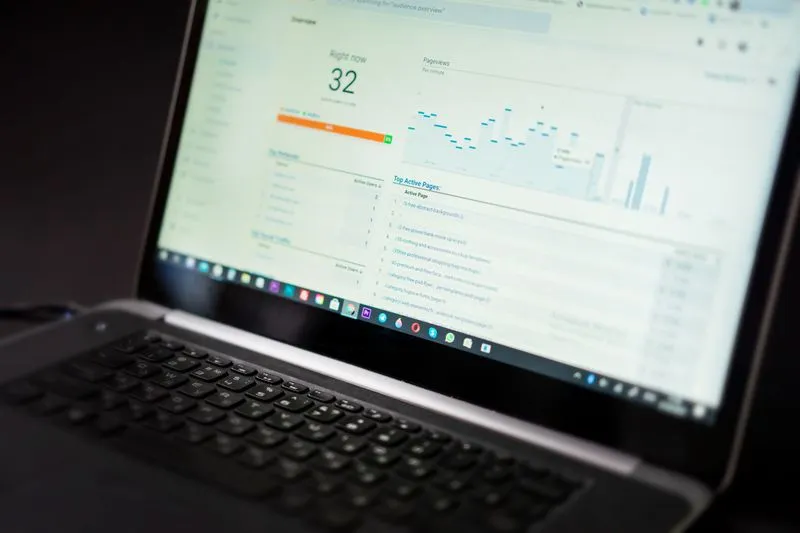
You cannot improve what you cannot see. Three ways to check your backlinks, from free to paid:
- Google Search Console. Free, and the only source straight from Google. Open the "Links" report to see which sites link to you and which pages they point to. Every Nigerian business should have this set up.
- Free tiers of SEO tools. Ubersuggest, Ahrefs, and Semrush all let you check a limited number of backlinks for free. Enough to see your biggest links and spot anything obviously toxic.
- A proper audit. If you have inherited a site with a messy link history, a full backlink audit shows you what to keep, what to disavow, and where the gaps are against competitors.
Check once a quarter. You are looking for two things: new quality links worth thanking someone for, and toxic links worth disavowing. This is not an investigation, relax, we are just reading your link report.

Want to learn SEO and link building yourself?
You can learn this. Backlinks are not magic, and the basics are very learnable. At Alpha Digital Network we run practical training on SEO and link building for individuals and teams, in person in Abuja, online, one on one, and for corporate groups. You leave knowing how to audit your own links, earn real ones, and avoid the packages that do damage. See our training programs if you would rather build the skill than rent it.
If you have read this far, you now understand backlinks better than most of the people in Nigeria charging to build them. That is either useful or mildly annoying, depending on who you were about to pay.
- →SEO expert in Nigeria , what a real one does, how to tell them from the fakes, and what the work costs in Naira.
- →On-page SEO best practices , the work on your own pages that makes your backlinks count for more.
- →SEO services in Nigeria , what real SEO costs, how long it takes, and how to pick an agency that isn't wasting your money.
- →Get a free backlink check , send us your site and we'll tell you honestly what your link profile looks like.
Want to learn SEO yourself?
We train individuals and organisations across Nigeria and Africa. In person in Abuja, online, one-on-one, or as a group session for your team. Everything we do for clients, we teach. You walk away with skills you can use the next day.

Frequently Asked Questions About Backlinks and Website Ranking
- Do backlinks still matter for SEO in 2026?
- Yes. Links remain one of Google's strongest ranking signals, alongside content and technical health. What has changed is tolerance for low-quality links. Buying hundreds of cheap links worked briefly years ago and now does the opposite. A few quality backlinks from trusted, relevant sites matter more than ever.
- How many backlinks does my website need to rank?
- There is no fixed number. It depends on your competition. For a low-competition local keyword in Nigeria, a handful of quality links plus solid on-page work can be enough. For a competitive national term, you may need dozens of strong links built over months. Always check what the sites currently ranking have, then aim to match the quality, not just the count.
- Can I get backlinks for free?
- Yes, and the best ones usually are free. Google Business Profile, reputable Nigerian directories, guest posts on industry blogs, and being quoted by journalists all earn links without paying for the link itself. They cost time and effort, not Naira. The links you pay a vendor for directly are the ones most likely to be low quality or harmful.
- How long do backlinks take to improve rankings?
- Expect movement over months, not days. After a quality link is found and indexed by Google, it can take a few weeks to a few months for the ranking effect to show, depending on the keyword's competition. For low-competition local keywords, you may see movement in 60 to 90 days. Competitive terms take longer.
- Should I buy backlinks for my Nigerian website?
- No. Bought link packages, the kind advertised as hundreds of links for a few thousand Naira, are against Google's guidelines and can get your site penalised. One link from a Nigerian newspaper is worth more than fifty bought links. Spend the effort earning real ones instead. It is slower and it actually lasts.
- What is the difference between dofollow and nofollow backlinks?
- A dofollow link passes ranking value to your site and is the default for most links. A nofollow link tells Google not to count it as a recommendation, so it does not directly pass ranking value. Most social media and comment links are nofollow. A healthy link profile has a natural mix of both, but the dofollow links from trusted sites are what move rankings.
- How do I get backlinks for a brand new website in Nigeria?
- Start with the foundations. Set up Google Business Profile and a few reputable directories, then publish one or two genuinely useful pages worth linking to. From there, pitch a guest post to a Nigerian blog in your industry and look for chances to be quoted by local publications. New sites earn links slowly at first, then faster as authority builds. Patience and useful content beat shortcuts every time.
These Q&As are emitted as FAQPage schema in the page head. Google may show them directly in search results.
Still not sure? Send us a message.
If you want to know whether your backlinks are helping you or quietly holding you back, send us a WhatsApp message or give us a call. We'll give you 20 minutes. We'll look at your link profile, check for anything toxic, and tell you honestly what to do next. No pitch. Just the honest answer.