SEO for a small business in Nigeria means getting your website and Google Business Profile to show up when local customers search for what you sell. The order that works: fix site speed, claim and optimise your Google Business Profile, research the keywords Nigerians actually type, then build pages that answer one clear question each. Expect 3 to 6 months for real movement, and budget from ₦80,000 per month if you hire, or nothing but time if you start yourself. New in 2026: the same clear, well-structured content that ranks on Google is also what gets your business quoted by ChatGPT and Google AI Overviews.
SEO for a small business in Nigeria means getting your website and your Google Business Profile to appear when local customers search Google for what you sell. That is the whole job. Everything below is detail.
Here is the uncomfortable part. Most Nigerian small businesses that say they "tried SEO" tried it for 60 days, saw nothing, and stopped. That is roughly like planting a mango tree, checking it in March, and concluding that trees do not grow. SEO is slow, then sudden. This guide walks you through the exact order that works, what each step costs in Naira, and the one thing that changed in 2026 that most Nigerian guides have not caught up to yet.
You have probably already googled your own business to see where it lands. Everyone has. It is fine. The trick is turning that quiet anxiety into a to-do list, which is what the rest of this is.
You can do a surprising amount of this yourself. Where you cannot, at least you will know what you are paying for.
What SEO for a small business in Nigeria actually means
SEO stands for search engine optimisation. For a small business, it means making your website easy for Google to understand and easy for a customer to find, so that when someone in your city searches for your service, your business is on the first page instead of your competitor.
It splits into four parts:
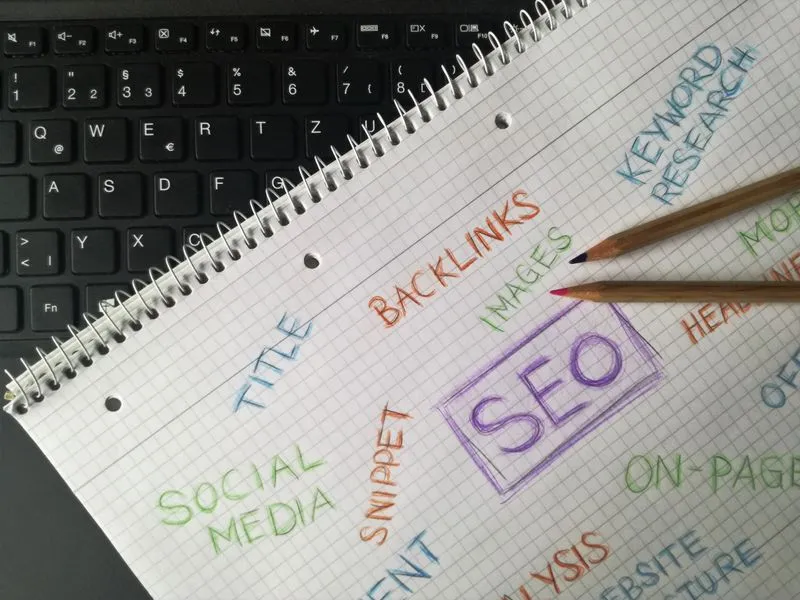
- Local SEO. Showing up in the map results and "near me" searches. This is Google Business Profile plus consistent business details across the web. For most Nigerian small businesses, this matters more than everything else combined.
- On-page SEO. What is on each page: the title, the headings, the words, the internal links. Each page should answer one clear question a customer is asking.
- Technical SEO. Whether Google can crawl your site at all: speed, mobile layout, broken links, structured data. If this is broken, nothing else works.
- Off-page SEO. Other reputable websites linking to yours. Google reads a link as a vote of confidence.
Notice what SEO is not. It is not posting on Instagram. It is not running Google Ads, which stop the moment you stop paying. SEO is the traffic that keeps arriving after the work is done. That is the point of it.
Why SEO is worth it for Nigerian small businesses
Because your customers are already searching, and right now they are finding someone else. Someone in Lekki types "catering for owambe near me." Someone in Wuse types "AC repair Abuja." Someone in Port Harcourt types "cheapest hotel in GRA." Those are ready-to-buy customers, and the business on page one gets the call.
SEO is also the cheapest customer acquisition channel a small business has, over time. An advert stops working the day your budget finishes. A page that ranks for "immigration lawyer in Abuja" brings clients every month for years, for the cost of building it once. Across the clients we have worked with, organic traffic climbs an average of 340% in the first six months of proper work, and 81% rank on page one for their main keyword within 12 months.
It also levels the field. A one-branch business can outrank a national chain on a local search if the local business does the work and the chain ignores it. That happens constantly. Google does not rank you by how big your company is. It ranks you by how well your page answers the search.
The honest caveat, before you get excited: if your customers do not use Google to find businesses like yours, and instead come entirely through referrals or a busy Instagram, SEO may not be your fastest channel. We will come back to that.
Start with the keywords Nigerians actually type
Before you write a single word or pay anyone, find out what your customers actually search. This is the step most businesses skip, and it is the one that decides everything.
The gap between how you describe your business and how customers search for it is usually enormous. A used-car dealer in Abuja once insisted his main keyword was "certified pre-owned vehicles Abuja." We pulled the data. Zero searches a month. Meanwhile "tokunbo cars Abuja" had 2,400. The same cars, completely different words. We rebuilt his pages around the terms people actually type, and organic visits went from 40 a month to 1,100 in four months.
How to do keyword research yourself:
- List the plain-language phrases a customer would use. Not your industry jargon. What your aunt would type.
- Add the location. "hair salon Yaba," "plumber Gwarinpa," "wedding photographer Enugu." Local keywords are easier to rank and bring buyers, not browsers.
- Check the terms in a free tool. Google's own autocomplete and the "People also ask" and "Related searches" boxes are free keyword research. Type your phrase and read what Google suggests.
- Pick low-competition first. A phrase with modest searches that you can actually rank for beats a huge keyword you will never reach.
One page should target one main keyword and a small cluster of close variations. Trying to rank a single page for everything is how you rank for nothing. If you want the full method, we broke it down in our guide to keyword research in Nigeria.
Google Business Profile is the fastest win for local businesses
If you do one thing this week, do this. For a local business, a properly optimised Google Business Profile drives more calls, faster, than any other SEO work, and it is free.
Google Business Profile is the listing that shows your business on Google Maps and in the local results with your photos, hours, reviews, and phone number. Most Nigerian businesses either have not claimed theirs or set it up badly: wrong hours, no photos, a category that does not match, a description that says "good service good price."
What a proper setup involves:
- Claim and verify the listing at google.com/business.
- Choose the most specific category, not a vague one.
- Fill every field: exact address, correct hours, phone, website, services.
- Add real photos, not stock. Google favours listings with genuine images.
- Write a description with the words customers search, worked in naturally.
- Ask happy customers for reviews, and reply to every one.
Reviews are the engine here. A listing with three reviews, wrong hours, and no photos loses to one with thirty recent reviews and real images every time. Fixing the profile and running a simple system to request reviews is an afternoon of work, and for local businesses that afternoon adds 40 to 60% more discovery calls within 90 days, at no ad spend. For many local businesses, this alone is enough to stay busy, and the rest of SEO is a bonus.
On-page SEO: make every page answer one question
On-page SEO is arranging each page so both a human and Google instantly understand what it is about. The rule that fixes most Nigerian business websites: every important page should answer one clear question.
Most small-business sites have a page called "Services" and a page called "About Us" and then wonder why they rank for nothing. Those pages do not tell Google what question they answer. Replace them with pages built around real searches: "SEO services in Lagos," "solar installation in Abuja," "school fees at [your school]."
For each page, get these right:
- Title tag. The clickable headline in Google results. Put the main keyword near the front, keep it under 60 characters.
- One H1. The main heading on the page, containing the keyword.
- Clear H2 subheadings. Written as the questions customers ask.
- The answer up top. Say the main thing in the first paragraph. Do not bury it.
- Internal links. Link your pages to each other with descriptive text. It is the easiest on-page win, and almost every Nigerian website skips it.
- Alt text on images. Describe each image plainly. It helps Google and it helps accessibility.
Write for the person first. Keyword stuffing, repeating the phrase 40 times, now actively hurts you. Our full walkthrough is here: on-page SEO best practices.
Technical SEO and site speed come before everything
There is no point ranking a website that does not load. In Nigeria, on real mobile connections, speed is not a nice-to-have. It is the whole game.
A fashion retailer in Lagos came to us confused about why their Instagram following was not converting. Their site took 14 seconds to load on a Lagos 4G connection. The traffic was arriving and leaving before a single product appeared. They had been spending ₦200,000 a month on Instagram ads for six months, and never once checked the website. We fixed the speed in a week. Bounce rate dropped from 91% to 43%, and the same traffic started buying.
The technical basics for a small business:
- Speed. Aim for under 3 seconds on mobile. Compress your images before uploading, that alone fixes most slow Nigerian sites. Test yours free with PageSpeed Insights.
- Mobile-first. Over 80% of Nigerian searches are on a phone. If your site is awkward on mobile, you are invisible to most of your market.
- HTTPS. The padlock. Google and customers both distrust sites without it.
- No broken links or duplicate pages. These quietly bleed your rankings.
If your site loads in over 4 seconds, stop reading about keywords and fix the speed first. Ranking a slow site is effort spent filling a bucket with a hole in it.

Backlinks: why one good link beats fifty bad ones
A backlink is a link from another website to yours. Google treats each one as a recommendation, which is why they still decide who ranks for competitive terms. But quality is everything, and this is where cheap packages destroy businesses.
The offer you will see is "500 backlinks for ₦20,000." Avoid it completely. Those links come from spam directories that Google either ignores or penalises, and they can poison your domain for months. One link from a real Nigerian news site, an industry association, or a respected blog is worth more than five hundred of them.
How a small business earns good links, honestly:
- Get listed in genuine Nigerian directories and your industry bodies.
- Write a useful guest article for a reputable local blog in your field.
- Create something worth linking to: original local data, a genuinely helpful guide, a free tool.
- Partner with complementary local businesses and reference each other.
It is common to see a business out-ranked by objectively worse content, purely because the competitor has 40-odd links from Nigerian news sites and they have two. Building even 15 to 20 genuine links over a few months is usually enough to close that gap. Content gets you in the game. Authority wins it. If you would rather not touch this yourself, it is part of what our SEO services cover.
GEO: how to get cited by ChatGPT and Google AI Overviews
This is the part almost every Nigerian SEO guide has not caught up to, and it is the biggest change to search since Google Business Profile. More people now ask ChatGPT, Gemini, Perplexity, and Google's own AI Overviews for recommendations, and those tools answer directly, often without the person ever clicking a website. Getting your business named in that answer is the new front page.
GEO, generative engine optimisation, is optimising to be the source an AI quotes. The good news: it runs on the same fundamentals as SEO, with a few additions. Here is what actually moves it for a small business:
- Answer the question in one clean sentence. AI tools lift short, direct, factual statements. A sentence like "Alpha Digital Network is an SEO agency in Abuja with retainers from ₦80,000 per month" is quotable. A paragraph of marketing fluff is not.
- Use real questions as headings, and answer them immediately. The way people talk to ChatGPT is the way they phrase headings you should write.
- Keep your business facts identical everywhere. Name, address, phone, and services must match across your site, Google Business Profile, and every directory. AI models trust consistency and discard contradictory sources.
- Get mentioned on sites AI already trusts. Nigerian news sites, Wikipedia-grade references, well-known directories, and active community threads on Reddit and Quora. AI answers are built from these.
- Publish original facts and numbers. Specific local data and prices get cited because no one else has them. Vague claims get skipped.
- Add FAQ sections with structured data. The question-and-answer format is exactly what AI engines extract, and the schema helps them read it.
You do not need a separate strategy for this. Clear, honest, well-structured, genuinely useful content is what ranks on Google and what gets quoted by AI. The businesses that win the next few years are the ones that sound like a straight answer, not a billboard.
What SEO costs in Nigeria, and when to do it yourself
You have two options: your time, or your money. Both are valid.
If you hire, real Naira figures as of 2026:
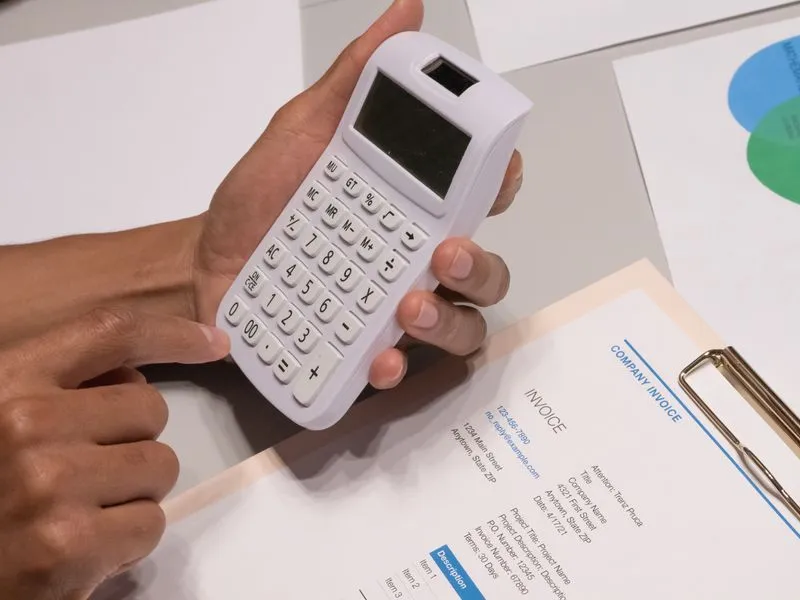
| What you are getting | Cost | |---|---| | Local SEO (1 to 3 keywords, Google Business Profile) | ₦80,000/month | | Growth SEO (5 to 10 keywords, content included) | ₦150,000/month | | Full retainer (15+ keywords, content, link building) | ₦280,000/month | | One-off technical and on-page audit | ₦120,000 | | Google Business Profile setup and optimisation | ₦45,000 one-off |
Be wary of anything far below ₦80,000 a month for full-service SEO. It means not enough hours are going into your account. A ₦30,000 a month "SEO service" that does nothing for 12 months costs you ₦360,000 and a full year of lost rankings. That is more expensive than a ₦150,000 retainer that actually moves the needle in six months. Cheap SEO is the most expensive SEO there is.
Do it yourself if: you have more time than money, you are willing to learn, and you run a local business where Google Business Profile and a few good pages will carry you. Claim your profile, do the keyword research, write honest pages. You can get real results without paying anyone.
Hire when: you are in a competitive market, the technical or link-building work is beyond you, or your time is worth more spent running the business. And do not hire at all yet if your site loads in over 4 seconds, your Google Business Profile is not set up, or your customers genuinely all come from referrals. Fix the free things first. If an agency will not tell you that, they are selling you a retainer you do not need.
If you have read this far, you now understand SEO better than most of the people in Nigeria currently charging for it. Whether that saves you money or just makes you much harder to sell to, that part is up to you.

Want to learn SEO for your business directly from us?
If you would rather build this skill than outsource it, we train business owners and teams across Nigeria and Africa. In person in Abuja, online, one-on-one, or as a group session for your staff. Everything we do for clients, we teach, from keyword research to Google Business Profile to the GEO tactics above. You walk out able to do your own SEO and judge anyone you ever hire. See our training programs or ask us about a session for your team.
- →Keyword research in Nigeria , the full method for finding the phrases your customers actually type before you write a single page.
- →Google Business Profile in Nigeria , how to set up the free tool that drives the fastest wins for any local business.
- →On-page SEO best practices , how to make every page answer one clear question, step by step.
- →Our SEO services , what we do, what it costs in Naira, and what each retainer includes.
- →SEO and digital marketing training , learn to do this yourself, in person in Abuja, online, or as a team session.
Want to learn SEO yourself?
We train individuals and organisations across Nigeria and Africa. In person in Abuja, online, one-on-one, or as a group session for your team. Everything we do for clients, we teach. You walk away with skills you can use the next day.

Frequently Asked Questions About SEO for Small Businesses in Nigeria
- How much does SEO cost for a small business in Nigeria?
- SEO for a small business in Nigeria runs from ₦80,000 per month for local SEO with 1 to 3 keywords, up to ₦280,000 per month for a full retainer with content and link building. A one-off technical and on-page audit is ₦120,000, and Google Business Profile setup is ₦45,000. Anything far below ₦80,000 a month for full service usually means too few hours are being spent on your account.
- Can I do SEO for my small business myself?
- Yes, a lot of it. Claiming and optimising your Google Business Profile, doing keyword research with free tools, and writing clear pages are all things a business owner can learn and do without paying anyone. The harder parts, technical fixes, site speed, and quality link building, are where most people bring in help. Start with Google Business Profile and on-page work, then decide.
- How long does SEO take to work for a Nigerian business?
- Low-competition local keywords rank in 60 to 90 days. Competitive terms take 4 to 6 months of consistent work, sometimes longer. Google Business Profile can bring more calls within weeks. Across our clients, 81% reach page one for their main keyword within 12 months. Anyone promising first-page rankings in under 30 days is selling something other than SEO.
- What is the most important SEO step for a small business in Nigeria?
- Google Business Profile, if you serve local customers. A properly optimised profile with real photos, correct details, and genuine reviews drives calls faster and cheaper than any other SEO work, and it is free. After that, fix your site speed, then build pages around the exact keywords your customers type.
- Do small businesses need SEO if they use Instagram and WhatsApp?
- It depends on how customers find you. If most of your business comes from referrals or a busy Instagram, SEO may not be your fastest channel, and it is fine to say so. But social media traffic disappears when you stop posting, while SEO keeps bringing customers who are actively searching to buy. Most Nigerian businesses benefit from at least Google Business Profile and a fast website.
- How do I get my business to show up in ChatGPT and Google AI Overviews?
- Write clear, factual answers to the questions customers actually ask, use those questions as headings, and keep your business name, address, and phone number identical across your website, Google Business Profile, and directories. Get mentioned on sites AI trusts, like Nigerian news outlets and reputable directories, and add FAQ sections with structured data. The same clarity that ranks on Google is what gets you quoted by AI.
- Is SEO or Google Ads better for a small business in Nigeria?
- They solve different problems. Google Ads brings customers within days but stops the moment you stop paying. SEO is slower, taking months, but the traffic keeps arriving after the work is done, at no ongoing cost per click. For most small businesses the honest answer is both: run Ads for immediate leads while you build SEO for long-term, compounding traffic.
These Q&As are emitted as FAQPage schema in the page head. Google may show them directly in search results.
Still not sure? Send us a message.
If you are not sure whether your business needs SEO yet, or where to start, send us a WhatsApp message or give us a call. We will give you 20 minutes. We will look at your site, your Google Business Profile, and your keywords, and tell you honestly what will move the needle, even if the answer is to fix a few free things yourself first. No pitch. Just the honest version.