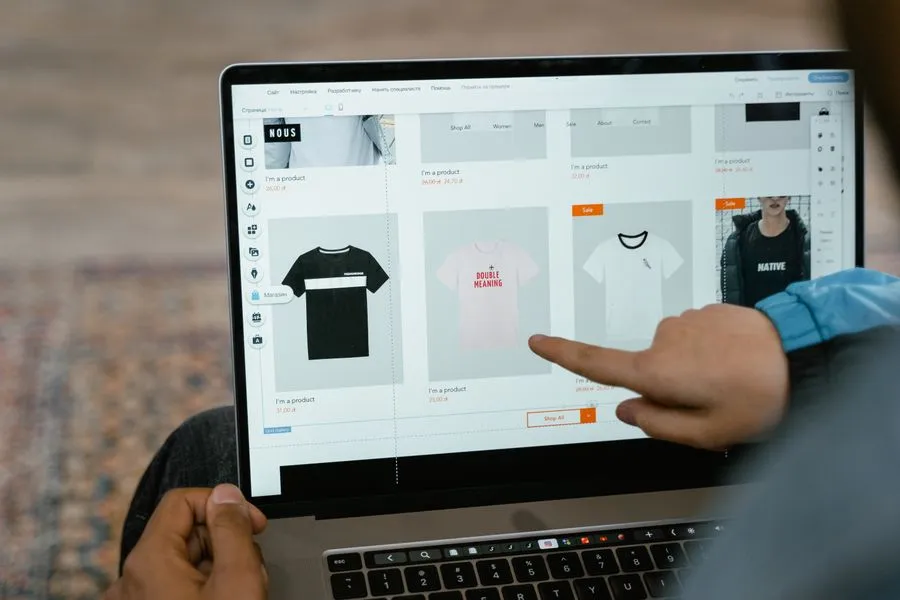
The best website platform for a Nigerian small business depends on what you're selling. WordPress fits businesses that will grow past a simple brochure site. Wix or Squarespace fit a service business that needs to look professional fast. Shopify, Paystack Storefront, or Flutterwave Store fit anyone selling products online, with the last two built specifically for the Nigerian payment landscape. None of them beat a custom-built site once your business outgrows templates, and that upgrade runs ₦350,000 as a one-off project.
The best website platform for a small business in Nigeria depends on one question: are you selling a service, or selling products? Get that answer right and the platform choice mostly makes itself.
Every "best platforms" list online is written for a global audience and quietly ignores that Nigerian businesses need to accept bank transfers, Paystack, and Flutterwave without wrestling a payment gateway. Here's the version written for that reality: what each platform actually does well, what it costs, and when none of them are the right call.

Which website platform is actually best for a Nigerian small business
There's no single winner. There's a right platform for four different situations.
| Situation | Best platform | Why | |---|---|---| | Service business, simple site | Wix or Squarespace | Fastest to launch, template-based, looks professional out of the box | | Growing business, will need more pages and features over time | WordPress | Most flexible, scales from 5 pages to 50 without switching platforms | | Selling products, need full store control | Shopify | Built for e-commerce, handles inventory and shipping properly | | Selling products, Nigerian customers, keeping it simple | Paystack Storefront or Flutterwave Store | Free or near-free, built around Naira payments from day one |
If you read nothing else in this post, that table is the direct answer. Everything below is the reasoning behind it.

WordPress: the flexible option most businesses outgrow into
WordPress runs a large share of the websites on the internet, and for good reason. It handles a 5-page service site and a 50-page catalogue equally well, without forcing you to rebuild anything when you outgrow the starting point.
The tradeoff is setup. WordPress isn't a closed system like Wix, it's a foundation you assemble, hosting, a theme, plugins for SEO and forms and security. That flexibility is exactly why developers reach for it and why a first-timer can find it overwhelming.
That assembly work is also where things go wrong for businesses that try it alone. A theme with too many features slows the site down. A plugin nobody updates becomes a security hole. None of that is WordPress's fault specifically, it's the fault of nobody maintaining the foundation once it's live. A WordPress site set up properly, on decent hosting, with a lean theme and only the plugins you actually use, is one of the fastest and most flexible options on this list. A WordPress site assembled badly is the reason WordPress has a reputation for being slow, which isn't really about WordPress at all.
Pick WordPress if: you expect to add pages, features, or a blog over time, and you're either comfortable learning the basics or paying someone to set it up properly once.
Wix and Squarespace: the easiest way to get online fast
Wix and Squarespace are drag-and-drop builders. Pick a template, swap in your text and photos, publish. No hosting to configure, no plugins to manage, no developer required.
The cost of that simplicity: you're building inside someone else's box. Custom functionality is harder to add later, and if you ever outgrow the platform, you're rebuilding from scratch rather than extending what you have. For a business that just needs four solid pages and isn't planning anything complicated, that's a fair trade.
Squarespace generally edges out Wix on design polish out of the box, templates look considered rather than generic. Wix edges out Squarespace on flexibility within its own builder and has a larger library of add-ons for specific needs like bookings or memberships. For most Nigerian service businesses choosing between the two, the deciding factor isn't features, it's which template you actually like the look of, since both platforms will comfortably handle a straightforward brochure site.
Pick Wix or Squarespace if: you need to be online this week, your needs are simple, and you're not planning to bolt on custom features later.

Shopify, Paystack Storefront, and Flutterwave Store: if you're selling online
If you're selling physical products, a general-purpose website builder is the wrong tool. You need inventory tracking, shipping calculations, and a checkout that doesn't fall over. That's a dedicated e-commerce platform's entire job.
Shopify is the global standard, built specifically for online stores, with every feature a growing shop needs. It's also built for a market where card payments are the default, which means a Nigerian merchant has to work a little harder to wire up local payment methods properly.
Paystack Storefront and Flutterwave Store solve that from the opposite direction. Both let a small business list products and accept Naira payments, bank transfer, and card, without the setup work Shopify needs to feel native to a Nigerian customer. Neither has Shopify's depth of features, but most small merchants never need that depth.
The honest tradeoff: Shopify gives you a proper storefront with your own domain, your own design, and room to grow into a real catalogue. Paystack Storefront and Flutterwave Store get you selling faster with less setup, but the storefront itself looks and feels more like a product listing page than a full brand experience. If you're selling ten products to build momentum, that's a fine place to start. If your brand is the product, a proper storefront earns its keep sooner than you'd think.
Pick Shopify if: you're planning a serious catalogue and eventual international sales. Pick Paystack Storefront or Flutterwave Store if: you want to start selling online this week without fighting a payment gateway.
What actually matters when picking a platform
Four things separate a platform that works from one that quietly loses you customers: speed, mobile responsiveness, how well it plays with SEO tools, and whether you can actually maintain it yourself.
Speed matters more than most business owners realise. A client of ours, a fashion retailer in Lagos, built a site on a platform with heavy, unoptimised templates. It took 14 seconds to load on a Lagos 4G connection. Instagram traffic was arriving, clicking, and leaving before a single product image appeared. We moved them to a leaner setup and fixed the image sizes in a week. Bounce rate dropped from 91% to 43%, and the same traffic that had been leaving started converting.
Here's the honest take: a free website builder that loads slowly costs you customers just as fast as having no website at all. The platform's price tag matters less than whether it's fast enough for someone to actually wait for it.
Mobile responsiveness isn't optional either, every platform on this list handles it by default now, but always check your specific template on an actual phone before you launch, not just the desktop preview.
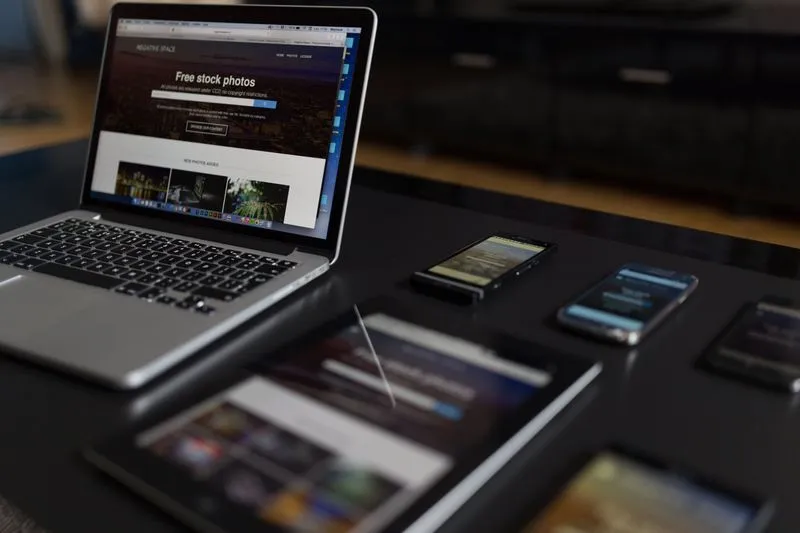
What a responsive design actually needs, whichever platform you choose
"Responsive" gets used as a checkbox feature when it's really a set of specific things that either work on a phone or don't.
Text that resizes without pinching. If a visitor has to zoom in to read a sentence, that's a failed responsive design, whatever the platform's marketing says.
Buttons and links big enough to tap accurately. A "Contact Us" button that's easy to click with a mouse and nearly impossible to tap with a thumb is a responsive design in name only.
Images that load fast on mobile data, not just desktop wifi. A hero image sized for a 27-inch monitor loads painfully slowly on a phone, and most of your Nigerian visitors are on a phone.
A navigation menu that collapses sensibly. A desktop menu with ten items dumped onto a small screen without a proper mobile menu structure is where visitors give up and leave.
Forms that work with a phone keyboard. A contact form with tiny fields and no proper input types, forcing someone to squint and correct typos on a touchscreen, quietly kills leads that never get reported anywhere.
Every platform in this post claims to be responsive by default. Most templates are. What actually breaks responsiveness is customisation, someone adding a wide table, an oversized image, or a custom element that wasn't tested on a phone before publishing. Check your actual site on an actual phone before you call it done, template defaults included.
What it costs on each route, in Naira
DIY builders like Wix, Squarespace, Shopify, Paystack Storefront, and Flutterwave Store charge a small recurring fee or a transaction percentage rather than a one-off project cost, on top of whatever you'd pay for a matching domain name.
The alternative, a professionally built website, is a one-off project cost with no ongoing platform fee. A custom-built 5-page business site runs ₦350,000. A larger 10 to 15 page site with SEO setup included is ₦650,000. Both are delivered in 10 to 14 business days from brief sign-off, not "whenever we get to it."
Neither route is automatically cheaper once you add up a year or two of subscription fees against a one-off build. Run the comparison for your specific timeline before assuming the free builder is the budget option.
When no platform is the right answer, and you need a developer instead
Every platform on this list is built around a template. If your business needs something a template can't do, a booking system with specific rules, a custom calculator, an integration with software you already use, no amount of platform-hopping fixes that. You need something built around your actual business.
That's also true if your brand depends on standing out and every competitor in your space is using the same three Wix templates. You already know the feeling of landing on a small business site and thinking "I've seen this exact layout somewhere else." That's a template doing its job a little too well.
There's no shame in starting on a platform and moving to custom later. Plenty of businesses we've built custom sites for started on Wix or a free builder, proved the business was worth investing in, then upgraded once the free version was visibly holding them back. Treating the platform choice as permanent is the mistake, not the platform itself.
If you've read this far, you now know more about picking a website platform than most people who've spent a whole weekend clicking through free trials trying to decide. Whichever route you take, at least you're choosing it on purpose.

Want to learn web design directly from us?
If you'd rather understand how to build and manage this properly than guess your way through a platform's settings, we teach it. In-person training in Abuja, online sessions, one-on-one coaching, or a group session if you're training staff to manage your website in-house. You walk away able to build, update, and troubleshoot it yourself.
Want to learn web design yourself?
We train individuals and organisations across Nigeria and Africa. In person in Abuja, online, one-on-one, or as a group session for your team. Everything we do for clients, we teach. You walk away with skills you can use the next day.
- →How to build a website for your small business in Nigeria , domains, hosting, security, and when to DIY versus hire someone.
- →How much does website design cost in Nigeria , the full pricing breakdown, from a 5-page site to full e-commerce.
- →How to learn web design in Nigeria , free tools, where to learn, and how long it actually takes.
- →Our training programs , in-person in Abuja, online, one-on-one, or as a group session for your team.
- →Get a free website review , we'll look at what you have and tell you honestly what it needs.

Frequently Asked Questions About Website Platforms for Small Businesses in Nigeria
- What is the best website builder for a small business in Nigeria?
- It depends on what the business does. Wix or Squarespace suit a service business that needs a simple, professional-looking site fast. WordPress suits a business that expects to grow and add features over time. Paystack Storefront or Flutterwave Store suit anyone selling products who wants Naira payments working from day one.
- Is WordPress good for small businesses in Nigeria?
- Yes, particularly for a business that expects to grow. WordPress handles a simple 5-page site and a large, feature-heavy site equally well without needing a platform switch later. The tradeoff is setup, it takes more configuration than a closed builder like Wix, so many businesses pay someone to set it up properly once.
- Can I sell products online without Shopify in Nigeria?
- Yes. Paystack Storefront and Flutterwave Store both let a small business list products and accept Naira payments, bank transfer, and card without Shopify's setup overhead. They have fewer advanced features than Shopify, but most small merchants selling a limited catalogue never need that depth.
- Which website platform is easiest for beginners?
- Wix and Squarespace are built specifically for non-technical users, with drag-and-drop editing and no hosting or plugins to manage. WordPress is more flexible but has a steeper learning curve, since you're assembling hosting, a theme, and plugins yourself rather than working inside a closed system.
- Which platform is best for SEO in Nigeria?
- WordPress generally gives the most control over SEO, with direct access to page titles, meta descriptions, structured data, and site speed optimisation through plugins. Wix and Squarespace have improved their SEO tools significantly but still offer less granular control than a properly configured WordPress site.
- How much does a website builder subscription cost in Nigeria?
- DIY builders charge a recurring monthly fee or, for Paystack Storefront and Flutterwave Store, a transaction-based fee rather than a flat subscription. Either way, it's separate from a matching domain name cost. A professionally built custom website avoids ongoing platform fees entirely, at a one-off cost of ₦350,000 for a 5-page site.
- Do I need a developer if I use a website builder?
- Not necessarily. Wix, Squarespace, Shopify, Paystack Storefront, and Flutterwave Store are all designed to be set up without a developer. You'll want one if your needs go beyond what a template can do, a custom booking system, a specific integration, or a design that needs to stand apart from every other business using the same template.
- Which platform is cheapest for a small business website in Nigeria?
- Paystack Storefront and Flutterwave Store are typically the lowest-cost entry point for a business selling products, since both work on a transaction-fee model rather than a fixed subscription. For a service business, a free-tier website builder can get a basic site live for the cost of a domain name alone, though most businesses outgrow the free tier quickly.
These Q&As are emitted as FAQPage schema in the page head. Google may show them directly in search results.
Still not sure? Send us a message.
If you're stuck choosing between platforms, or you picked one and it's not working out, send us a WhatsApp message or give us a call. We'll look at what you're trying to do and tell you honestly which route makes sense. No pitch. Just the honest answer.